
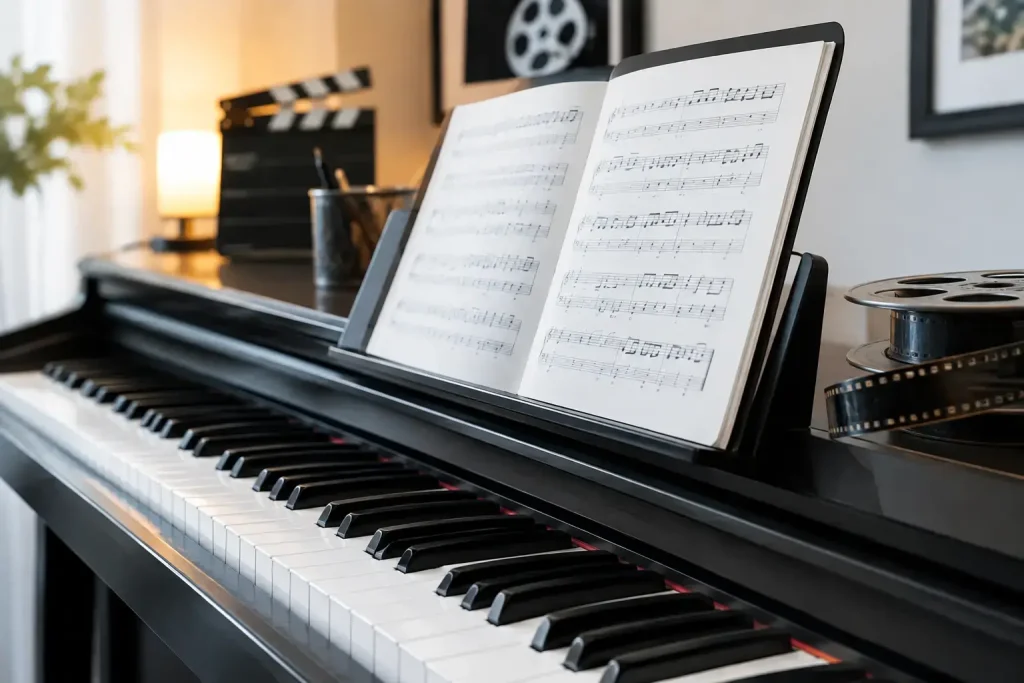
A great film theme can make a piano bench feel like the best seat in the theater. The right movie theme piano sheet music gives you more than recognizable notes: it gives you a clear piece to practice, a satisfying performance goal, and a song people immediately connect with. The key is choosing an arrangement that fits your hands and your current skills, rather than choosing the most impressive title and hoping it works out.
Digital sheet music makes that choice easier. When you can select a single licensed arrangement, access it online right away, and print it at home, you can spend less time searching for a bulky collection and more time playing the music you came for.
Start With the Version You Actually Want to Play
A movie theme is not always one fixed piece of music. A soundtrack may include an opening theme, a love theme, a piano solo, an orchestral cue, a vocal song, and several arrangements of the same melody. Before buying sheet music, pause for a moment and identify the exact version that caught your ear.
This matters because a piano arrangement may be based on the full orchestral score, a simplified melody, a vocal performance, or a specific recording. If you picture a sweeping string introduction but purchase a short lead-sheet style arrangement, the notes may be correct while the playing experience feels different from what you expected.
Listen for the musical feature you want to recreate. Is it the melody everyone knows? The dramatic bass line? The rolling accompaniment? Or the chord progression behind a singer? Your answer helps you choose between a piano solo, an easy piano arrangement, or piano-vocal music with chord symbols.
For players who sing, piano-vocal arrangements can be especially useful. They place the vocal melody and lyrics on the page while giving the piano a supporting role. If your goal is a solo instrumental performance, look for notation written to make the piano carry both the tune and the accompaniment.
Choosing Movie Theme Piano Sheet Music by Level
The best arrangement is not necessarily the easiest one, but it should be playable enough that practice produces progress. A piece that is slightly challenging can be motivating. A piece packed with wide jumps, dense rhythms, and unfamiliar key signatures can turn a favorite theme into a project you avoid.
Beginners: Look for a Clear Melody and Steady Rhythm
Beginning pianists usually benefit from arrangements with a simple melody, limited hand movement, and a manageable number of notes played at once. Easy piano versions often reduce complex orchestration into a recognizable tune with basic chords or repeated accompaniment patterns.
That reduction is not a flaw. It lets you build essential skills while still playing music you recognize. A simple theme can teach steady counting, hand coordination, phrasing, and how to bring out the melody above the accompaniment.
Check the key signature and rhythm before you start. A piece in C major with mostly quarter notes and half notes will feel very different from one filled with accidentals, syncopation, or fast arpeggios. If you are still learning to read both clefs comfortably, choose an arrangement with fewer ledger lines and modest left-hand leaps.
Intermediate Players: Find the Musical Detail
Intermediate pianists can often take on fuller arrangements that use broken chords, richer harmonies, octave melodies, and more varied dynamics. This is where many film themes become especially rewarding, because the piano can suggest the movement of an entire orchestra without requiring every original part.
Look for arrangements that preserve the main rhythmic character of the score. A suspense theme may rely on a repeated pulse in the left hand. A romantic theme may need a flowing accompaniment and careful pedal work. Those details are often what make a familiar melody sound cinematic rather than merely recognizable.
Be honest about your weakest area. If fast reading is difficult, a slower lyrical piece may be a better fit than an action theme with repeated sixteenth-note patterns. If rhythm comes easily but large stretches do not, avoid arrangements that require frequent tenths or rapid octave passages. Choosing thoughtfully is not lowering the bar. It is setting up a practice goal you can reach.
Advanced Players: Compare the Arrangement to Your Purpose
Advanced players may want a faithful transcription, a concert-style piano solo, or an arrangement with room for personal interpretation. At this level, difficulty is only one consideration. You may care more about harmonic detail, the length of the arrangement, the original key, or whether the score works for an audition, recital, wedding, or informal performance.
A more elaborate arrangement can be worth the extra work when the setting calls for it. For casual playing at home, though, a shorter and cleaner version may be more enjoyable. The best score is the one that serves the moment, not the one with the most notes.
Read the Page Before You Commit
A song title alone cannot tell you whether an arrangement will fit your needs. Whenever notation previews or arrangement details are available, use them. A quick scan can prevent a purchase that is technically correct but musically wrong for you.
Pay attention to the arrangement type, page count, key signature, tempo markings, and the first few systems of music. Notice whether the left hand is mostly chords, single bass notes, or active accompaniment. Look at the rhythm in both hands. If the opening already contains patterns you cannot comfortably read or play slowly, the rest of the piece is unlikely to feel easier.
Also consider the length. A two-page arrangement can be ideal for learning a memorable main theme, while a longer score may include an introduction, repeated sections, and a fuller ending. Neither is automatically better. Your available practice time should influence the decision.
Use Digital Sheet Music as Part of Your Practice Routine
Immediate access is helpful only if it leads to focused playing. Once you have purchased licensed sheet music and printed it, give the pages a little structure. Write in fingerings for awkward passages, circle repeat signs, and mark the spots where the melody moves between hands. These small notes save time when you return to the piece the next day.
Start by identifying the theme. Play the melody alone until you can hear its shape and phrase endings. Then add the left hand in short sections, keeping the tempo slow enough that you can maintain a steady pulse. Film music often sounds expressive because of timing and dynamics, but those details work best after the notes and rhythm are secure.
Pedal deserves special attention. Movie arrangements can tempt players to hold the pedal too long in pursuit of a big sound. Instead, change pedal with harmony changes and listen for blurred bass notes. A clean, controlled pedal can make even a simple arrangement sound polished.
If a passage feels impossible, reduce it before you abandon it. Practice the hands separately, play only the first note of each chord, or leave out an inner note temporarily. Once the motion feels natural, restore the full texture. This approach is useful for independent learners because it keeps practice moving forward without hiding the musical goal.
Why Licensed, Song-Specific Scores Make Sense
Popular movie music is copyrighted, and quality notation reflects the actual composition and authorized arrangement. Buying licensed sheet music gives you a legal, readable score created for the instrument and format listed. It also means you can choose the specific song you want rather than paying for a large book that contains only one or two pieces you plan to play.
For home musicians, the practical benefit is simple: select an arrangement, view it online, and print it for your own practice within the purchase terms. FreshSheetMusic.com is built around that single-song approach, with digital access that lets you move from finding a title to sitting at the piano without waiting for shipping.
Make the Theme Your Own
A film theme becomes memorable on piano when the melody feels intentional, not rushed. Once the notes are comfortable, listen to the original recording again and notice where the line grows, relaxes, or pauses. Add those choices gradually through dynamics, articulation, and breathing space between phrases.
You do not need a concert hall or a flawless take to enjoy the result. Print the arrangement, set aside ten focused minutes, and let one familiar theme become part of your regular playing.
Movie Theme Piano Sheet Music: Frequently Asked Questions
Where can I find movie theme piano sheet music in PDF format?
Look for reputable music publishers and licensed sheet-music platforms offering a PDF preview or purchase. Check that the arrangement is authorized and matches your instrument and skill level before downloading; a free download may not be legally available for copyrighted film scores.
Can I find arrangements for solo piano and different difficulty levels?
Yes. Many collections offer solo piano arrangements at beginner, intermediate, and advanced levels. Preview the notation and check the stated range of difficulty so you can choose a version that suits your experience as a piano player.
Which composers are featured in popular movie piano music?
Popular composers include John Williams, known for Star Wars, Harry Potter, and Jurassic Park, and Hans Zimmer, whose film scores include Pirates of the Caribbean and Interstellar. You may also find music by Joe Hisaishi, including themes from Howl’s Moving Castle.
What are some iconic movie themes to learn on piano?
Well-loved piano pieces include the Star Wars main theme, the Harry Potter “Hedwig’s Theme,” the Forrest Gump theme, and music from Titanic. Other iconic choices include “Circle of Life” from The Lion King, the Pink Panther theme, and themes from James Bond films.
Is “My Heart Will Go On” available as piano sheet music?
Yes. Search for “My Heart Will Go On” piano sheet music, the theme from Titanic. Arrangements vary from simplified versions to fuller solo piano adaptations, so check the key, accompaniment, and difficulty before choosing one.
Can I find the “Feather Theme” from Forrest Gump for piano?
Many sheet-music collections include an arrangement of the “Feather Theme” from Forrest Gump. Compare editions to find a version that captures the gentle character of the track while remaining comfortable for your playing level.
Are movie soundtracks considered classical piano music?
Movie soundtracks are written for cinema and span many styles, including orchestral, classical-inspired, jazz, and pop. Some film scores translate especially well into piano music, though a piano arrangement may adapt the original orchestration for one instrument.
Can a piano tutorial help me learn a movie theme?
A piano tutorial can help you learn rhythm, fingering, and phrasing, especially when paired with readable sheet music. Work through difficult passages slowly, then gradually build up to the tempo and expressive style of the original film score.
Can I get several movie themes in one piano songbook?
Yes. A piano songbook may collect themes from films such as The Godfather, Lord of the Rings, Jurassic Park, and Pirates of the Caribbean. Check the contents, arrangement style, and difficulty range to make sure the collection fits the music you want to play.