
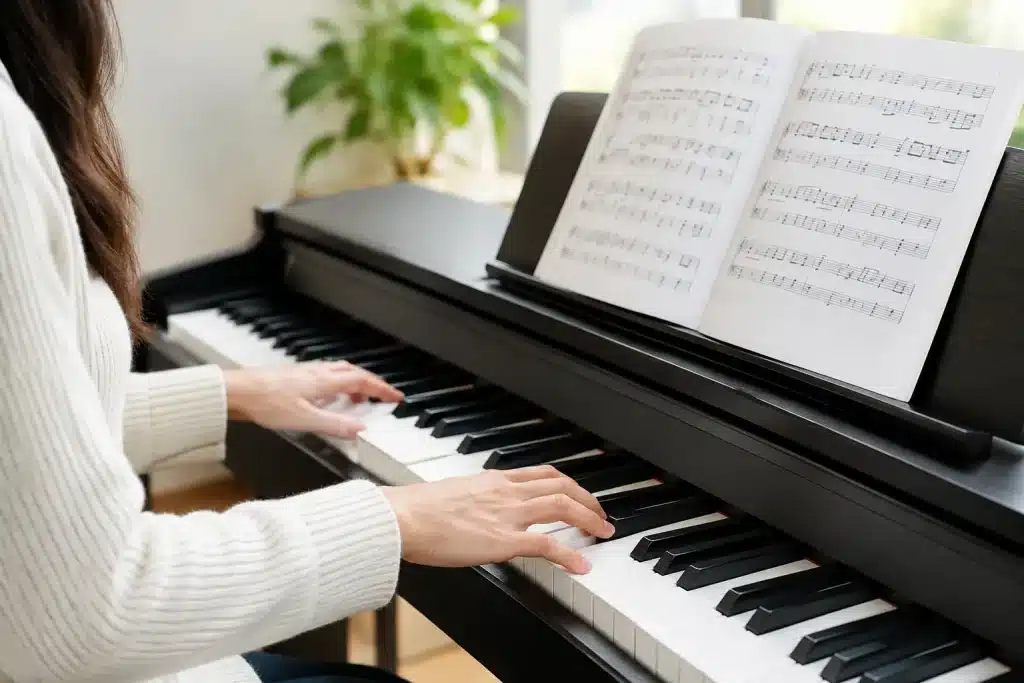
A worship song can feel deeply familiar when you sing it, then suddenly feel complicated when both hands meet the piano. The right easy worship piano sheet music closes that gap. It gives you an arrangement that preserves the song’s message and recognizable melody without turning every practice session into a sight-reading test.
For a beginning pianist, “easy” should not mean watered down or unmusical. It should mean that the notes, rhythms, chords, and page layout leave enough room to listen, sing, and play with confidence. For an experienced player who needs a quick preparation option, it can mean a clean arrangement that works well with limited rehearsal time.
What Makes Worship Piano Music Easy to Play?
A simple-looking score is not always an easy one. A slow worship ballad, for example, may have a sparse texture but require careful timing and expressive control. Meanwhile, an upbeat song with repeated chord patterns can be easier to learn because your hands settle into a predictable motion.
The most useful easy arrangements usually have a clear melody in the right hand, a manageable accompaniment in the left hand, and chord changes that do not demand constant leaps across the keyboard. They also tend to use friendly key signatures, steady rhythms, and repeat patterns that let you recognize what comes next.
Look at the full page before you buy or print. Dense notation, several layers of stems, frequent accidentals, and rapid sixteenth-note patterns can be signs that an arrangement is above your current comfort level. None of those details are bad, but they may not be the best choice when your goal is to learn a song for Sunday, a small group, or personal worship this week.
Start with the version you can actually finish
It is tempting to choose the fullest piano arrangement available, especially when you love a recording with a big build and rich instrumentation. But a simpler arrangement played steadily and musically will serve a song better than a difficult version that stops every few measures.
Choose notation that lets you get through the form first. Once the melody, chords, and transitions feel secure, you can add your own touches: a fuller left-hand octave, a gentle fill between phrases, or a higher melody note near the final chorus. Growing an arrangement over time is usually more satisfying than starting with more notes than your hands can manage.
How to Choose Easy Worship Piano Sheet Music
The best choice depends on where and how you plan to play. A solo at home, accompaniment for a singer, and support for a congregation can call for different versions of the same song.
For home practice, a piano solo arrangement can be a rewarding complete piece because it carries melody and harmony on its own. If you are accompanying yourself or another singer, music with chord symbols can be especially helpful. The written notes give you a dependable foundation, while the chords show the harmony behind the song and make it easier to simplify or repeat sections as needed.
For a worship service, pay attention to the song’s key and vocal range. An arrangement may feel easy under your fingers but sit too high or too low for the people singing. When possible, select music in a key that supports the vocalist or congregation first, then decide whether it is playable for you. Transposing a song is useful, but it can make a beginner-friendly arrangement noticeably harder.
Also consider song structure. Many modern worship songs use repeated verses, choruses, bridges, and instrumental sections. A score with clearly marked repeats and familiar section labels is easier to follow in the moment. It reduces the chance of losing your place when a leader repeats a chorus or extends a quiet ending.
Match the arrangement to your reading level
If you are new to reading piano notation, look for pieces with limited hand movement and simple rhythms. Whole notes, half notes, quarter notes, and repeated chord shapes are often easier to process than a page filled with syncopation. A melody that moves mostly step by step can also help your right hand feel more secure.
Early intermediate players can usually handle more chord inversions, broken-chord patterns, and a few independent rhythms between the hands. At this stage, an arrangement may still be called easy, but it should not require you to learn several advanced techniques at once.
If you play mostly by chords, do not dismiss written sheet music. A song-specific arrangement shows the melody, lyric phrasing, harmonic movement, and exact road map of the composition. That information can help you play more confidently than working from chord names alone, particularly when a song has an unexpected turnaround or a bridge that changes the harmonic pattern.
A Practical Way to Learn a Worship Song Faster
Printing music at home gives you a physical practice tool you can mark up. Circle repeats, write finger numbers over an awkward passage, and highlight the places where the harmony changes. A few clear notes on the page can prevent a lot of unnecessary restarting.
Begin by listening to the song and identifying its sections. Then play the right-hand melody alone until you can hear how it fits the lyrics. Next, practice the left hand slowly, paying attention to where chord changes land. Combining both hands is much easier when each part already feels familiar.
Keep the tempo low at first. Slowing down is not a sign that you are behind. It is how you build accurate hand coordination. Use a steady pulse, even if it is much slower than the recorded song, and increase speed only after you can play through a section without hesitating.
When a measure causes trouble, isolate just the transition into and out of it. Pianists often repeat the difficult measure many times but skip the notes that lead to it. Practicing the two measures before it and the one after it builds a more reliable path through the song.
For singers and worship leaders, try speaking or softly singing the lyrics while you play. This reveals whether your accompaniment leaves room for the vocal line. If the piano part feels busy, simplify it. Holding a chord longer or removing a decorative figure often makes the performance more supportive.
Use Simplicity as a Musical Choice
Worship music does not need to be crowded to feel meaningful. A gentle melody, steady harmony, and well-placed silence can carry a song with more clarity than constant fills. This is particularly true when you are playing with a vocalist or a group of singers who need a dependable musical anchor.
That does not mean every song should be played the same way. An energetic opening may need a stronger rhythm, while a reflective verse may call for fewer notes and lighter touch. The goal is to choose an arrangement that gives you control over those choices instead of forcing you to survive the notation.
There is also a practical trade-off between a simplified score and a highly detailed arrangement. A detailed version may include the colors and textures you hear on a recording, but it can take longer to prepare. An easier score may leave more space for your own interpretation. Neither option is automatically better. The better choice is the one that suits your skill level, your available practice time, and the setting where you will play.
Why Licensed Digital Sheet Music Helps
When you need a specific song, individual licensed digital arrangements make more sense than waiting for a large print collection that may include only one song you want. You can choose the instrument-relevant version, access it online, and print it for personal use from home.
That convenience matters when you are preparing for a lesson, a small gathering, or a last-minute addition to a set. It also lets you build a personal library one song at a time, based on music you will genuinely practice and perform. At FreshSheetMusic.com, song-specific digital notation is designed for that straightforward path from choosing a piece to putting it on your piano stand.
The best easy worship piano sheet music is the music that invites you back tomorrow. Pick a song you connect with, choose an arrangement that respects where you are now, and let steady practice turn familiar words into music you can share.
Where can I find easy worship piano sheet music?
Look for beginner-friendly arrangements on reputable music websites, church music resources, and publishers. Check the listed skill level, key, and format to find music that suits your needs.
What makes an easy piano hymn suitable for beginners?
Beginner arrangements often use simple rhythms, a comfortable hand position, and straightforward chords. A hymn with a clear melody and fewer difficult transitions can also be easier to learn.
Can I find free easy piano hymns in PDF format?
Some websites offer free hymn sheet music as PDFs, but availability and usage rights vary. Review the license or copyright information before downloading, printing, sharing, or performing an arrangement.
Are easy worship songs available for Christian services?
Yes. Many easy worship songs are arranged for church services, prayer meetings, and personal practice. Check that the arrangement fits your congregation’s preferred key and style.
How do I choose an easy piano hymn in the right key?
Choose a key that feels comfortable to sing and play. If the original arrangement is too high, low, or difficult, look for a transposed version or ask a qualified musician to help adapt it.
Can a video help me learn easy worship piano sheet music?
A video tutorial can help you hear the rhythm, melody, and chord changes. Use it alongside the sheet music so you can follow the written notes and build your reading skills.
Are hymns about grace available as easy piano sheet music?
Many traditional and contemporary hymns focus on grace. Search by the hymn title or theme, then check the arrangement’s difficulty and permissions before using it.
How can I practice easy piano worship songs effectively?
Start slowly, practice each hand separately, and work through short sections before playing the whole song. Gradually increase the tempo while keeping the rhythm steady and the melody clear.