
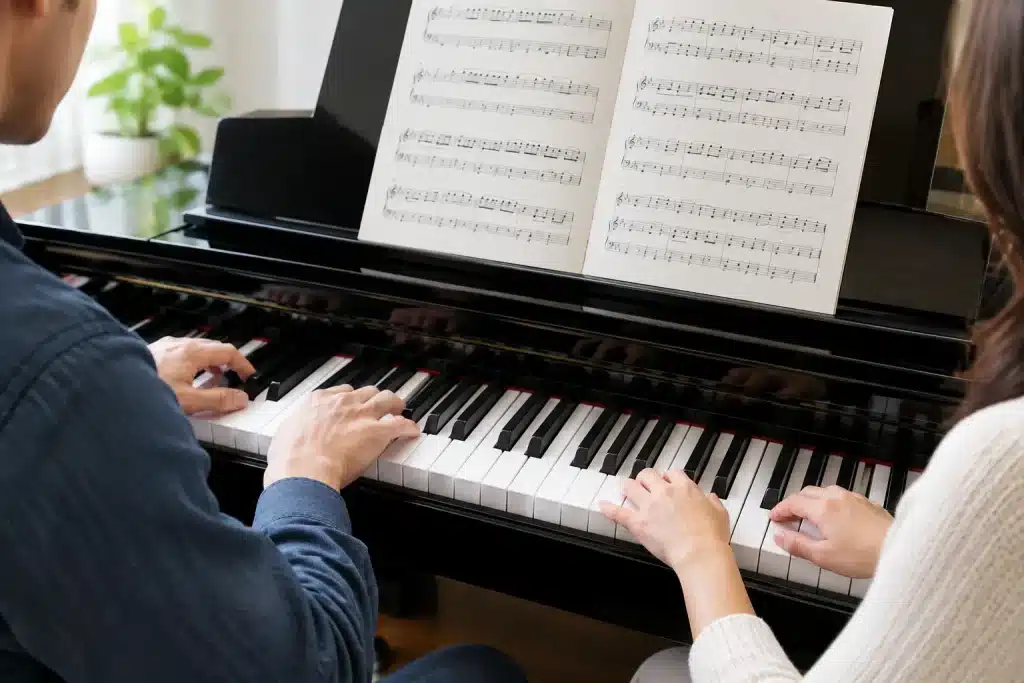
A familiar song changes the energy of piano practice. Instead of counting through an exercise no one recognizes, two players can build a performance around a melody they already know. The right piano duet sheet music popular songs arrangement gives each pianist a clear job, whether that means carrying the tune, shaping the harmony, or keeping the rhythm moving.
Duets are also one of the most practical ways to make piano playing social. They work for siblings sharing a bench, teachers and students, friends preparing a casual performance, and experienced players who simply want a new way to enjoy a favorite song. The key is choosing an arrangement that fits both players, not just choosing the song with the most recognizable title.
Why Popular Songs Work So Well as Piano Duets
Popular songs come with an advantage before either player touches the keyboard: familiarity. When both pianists know the hook, chorus, or groove, they can hear where the music is going. That makes reading easier, especially for a newer player who is still building confidence with rhythm, hand position, and chord changes.
A good duet arrangement turns the structure of a song into two complementary parts. One player may handle the melody or an upper-register accompaniment figure, while the other supports the performance with bass notes, chords, and a steady pulse. Neither part should feel like an afterthought. The best arrangements give both players musical material worth playing while keeping the overall sound full.
That balance matters because a duet is not simply a solo arrangement split down the middle. A dense piano part can become awkward when divided poorly, leaving one pianist with too much to manage and the other with long stretches of counting rests. Look for arrangements created specifically for duet performance, with the hand sharing, page layout, and musical roles planned in advance.
Choosing Piano Duet Sheet Music for Popular Songs
Start with the real ability level of both players. This is more useful than labeling someone a beginner or advanced pianist. Consider how comfortably each person reads rhythms, plays chords, uses the left hand independently, and keeps time without stopping. The duet will only feel enjoyable if both parts are manageable at the same tempo.
Know Which Part Each Player Will Play
Many piano duets use Primo and Secondo labels. Primo is typically the upper part and is often played by the person sitting to the right. It may include melody lines, higher chords, and decorative figures. Secondo is usually the lower part, played from the left side of the bench, and often provides bass movement, harmony, and rhythmic support.
That description is useful, but it is not a rule about who should take which role. A less experienced player may find a melody-led Primo part easier because the tune helps them stay oriented. Another player may prefer the predictable rhythm and chord patterns in Secondo. Read or preview the notation when possible and choose based on the actual writing, not the part name.
Match the Arrangement to the Occasion
The same song can need very different arrangements depending on why you are playing it. For a first duet at home, a short arrangement with a clear beat and repeated patterns is often the better choice. For a lesson, an arrangement that reinforces scales, intervals, dynamics, or chord recognition can add a useful learning goal. For a recital, a fuller arrangement with an effective introduction and a satisfying ending may be worth the extra rehearsal time.
Also consider the audience. A recognizable ballad may create a warm, expressive moment at a family gathering. An upbeat pop song can be more successful for a school event or casual performance. Familiarity helps listeners connect quickly, but the players still need an arrangement they can perform with control.
Check the Page Layout Before You Commit
Duet logistics are real. Two people sharing one piano need music that is easy to follow and easy to turn. Page turns can interrupt a performance, particularly when both players have active parts. If you purchase digital sheet music, print it at a readable size and prepare the pages before the first rehearsal.
For home use, a three-ring binder, a sturdy music stand, or properly arranged printed pages can make a noticeable difference. Avoid trying to read from a phone balanced on the piano. The notation may be technically available, but cramped viewing creates missed cues and unnecessary tension.
What Makes a Duet Arrangement Playable
A playable arrangement keeps the song recognizable without trying to reproduce every sound from the recording. Pop productions can contain layered vocals, drums, guitars, synthesizers, bass, and effects. Piano duet notation has to decide what matters most: the melody, harmonic progression, rhythmic character, and a few signature musical details.
For beginner and early intermediate players, that often means simple accompaniment patterns and a melody that stays close to the original phrasing. More advanced players may want syncopation, richer voicings, octave passages, or a more independent relationship between the two parts. Neither approach is automatically better. It depends on who is playing and how much rehearsal time is available.
Watch for arrangements that ask both players to cross into the same keyboard area at the same moment. Hand crossings can look impressive, but they require planning. Mark those spots during the first read-through and decide who moves first. Small details such as this prevent collisions and let both players focus on the music rather than defending their keyboard space.
A Simple Way to Rehearse a Popular-Song Duet
The fastest path to a confident duet is not playing the entire piece together from measure one. Start by listening to how the two parts fit. Each pianist should practice their own part enough to keep a steady beat, even through a mistake. If one person stops every time a note is missed, the duet cannot develop momentum.
Then rehearse in short sections. Begin with the introduction, the transition into the chorus, and the ending. These are common places for timing to drift because the musical texture changes. Count aloud if needed, especially before entrances and after rests.
Once the notes are secure, focus on musical communication. Decide who gives the starting cue. Agree on the tempo before playing. Notice where the melody should come forward and where the accompaniment needs to soften. These choices turn two correct individual parts into one performance.
A metronome can help during early practice, but do not let it become the only source of coordination. Players need to learn to listen to each other. Try one rehearsal where the Primo part leads the phrasing, then another where the Secondo player establishes a more dependable pulse. You will quickly hear where the duet needs clearer communication.
Getting More Value From Digital Duet Music
Buying an individual, licensed arrangement makes sense when you want a specific song rather than a full book containing titles you may never play. With digital access, you can view the notation online and print it at home for personal practice, teaching, or performance preparation without waiting for shipping.
Before printing, confirm that you have the correct instrument format and that the arrangement is truly written for piano duet. A piano solo, easy piano version, or vocal-piano arrangement can be useful in other settings, but it will not automatically provide balanced parts for two pianists. If the listing includes level or arrangement details, use them to compare options before you buy.
Printed music also gives you room to work. Pencil in fingerings for tricky passages, circle shared cues, mark repeat structures, and note where the players need to shift on the bench. Those small rehearsal notes are especially helpful when returning to a piece after a few days away.
Make the Song Your Shared Project
A popular-song duet does more than fill a practice session. It gives two musicians a shared goal, a reason to listen closely, and a performance that can grow from simple to polished one measure at a time. Choose a song both players genuinely want to hear again, print an arrangement that respects their current level, and let the first rehearsal be imperfect. The fun begins when the two parts start sounding like one song.